Why Children learn more when play doesn’t go to plan
A collapsed sandcastle, a spilled bucket or a muddy mixture that won’t hold its shape might seem like a small setback. But for young children, these unexpected moments can become some of the most interesting parts of play.
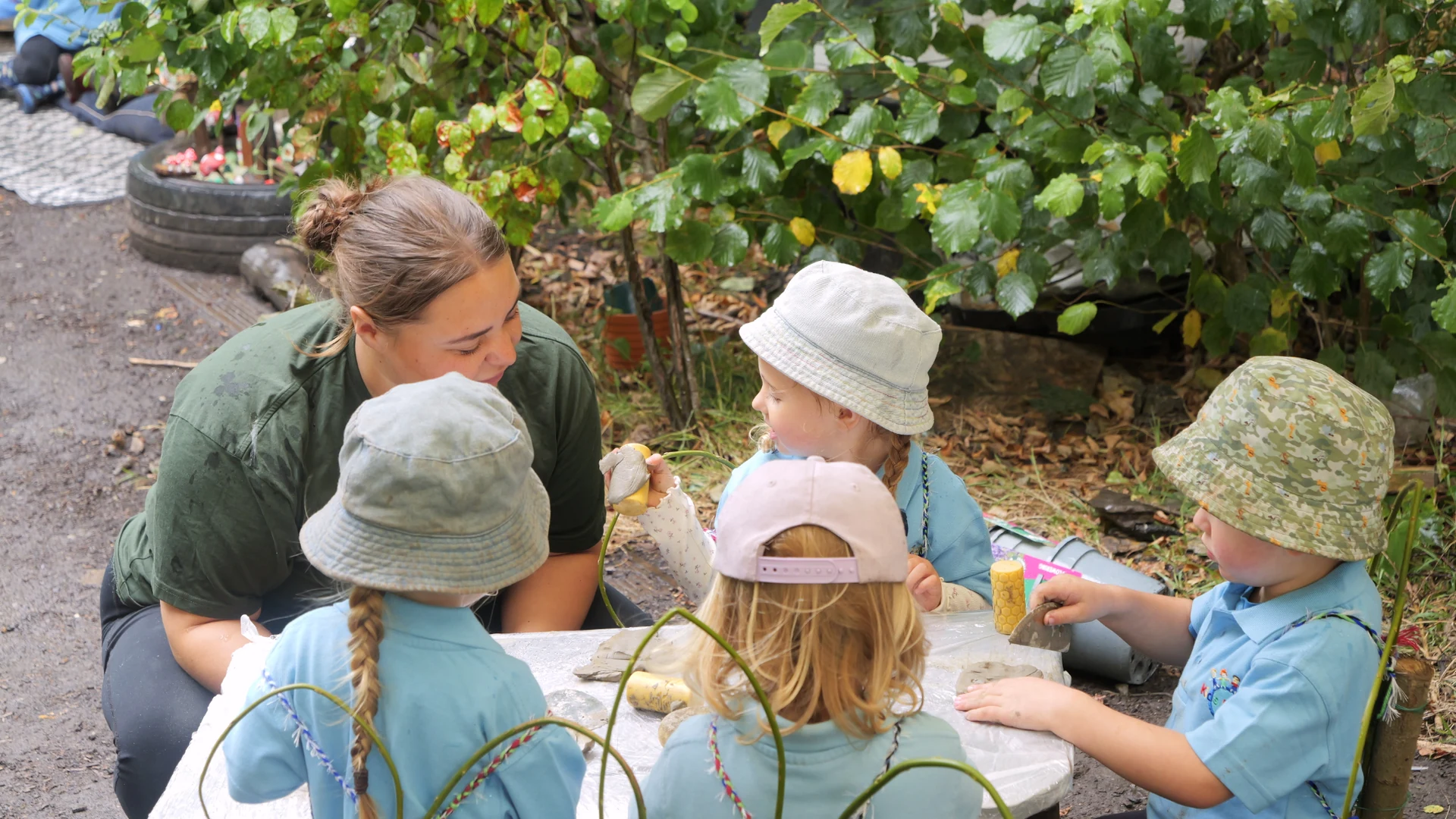
Imagine a child carefully building a sandcastle. They’ve filled the bucket, patted down the sand and turned it over, only to watch the whole thing collapse. They try again, perhaps pressing the sand down harder this time, but the result is much the same.
To an adult, the solution might seem obvious. Add some water and the castle will probably stand. But what happens if the child has the opportunity to work that out for themselves?
They might experiment with the amount of water they add or discover that changing the shape of the base makes a difference. What began as an attempt to build a sandcastle has become an investigation into how materials behave.
At Kids Planet, we recognise that these moments can be just as valuable as the activities that go exactly as planned.
Why getting it wrong can be part of getting it right
Young children are constantly developing ideas about how the world works. Much of this happens through direct experience, when they can try something and see what happens.
An unexpected result gives them new information. If a structure collapses, something about their approach needs to change. If water spills before reaching its destination, they might adjust how they carry the container.
This reflects the Characteristics of Effective Learning within the Early Years Foundation Stage, which recognise the importance of children developing their own ideas, making connections and finding ways to solve problems.
Children may try several approaches before finding one that works. They may also discover something they weren’t originally looking for and decide to follow that instead.
Learning doesn’t always follow the route an adult had in mind.
Knowing when to help and when to stand back
Adults naturally want to help children succeed, particularly when we can see a simple solution to something they’re finding difficult. But there is an important difference between supporting a child and solving a problem for them.
An educator watching a child struggle to make a sandcastle might recognise that adding water would help. Rather than immediately demonstrating the solution, they can observe how the child responds. Are they experimenting with different amounts of sand? Are they becoming frustrated, or are they still absorbed in the challenge?
These observations help an educator decide whether to intervene and what kind of support would be useful.
Sometimes a question such as “What do you notice about this sand?” might encourage the child to think differently. At other times, introducing a little water provides another possibility to investigate.
The skill lies in recognising what the child needs without taking ownership of the experience.
This is central to our approach at Kids Planet. Our educators understand child development and use that knowledge to respond to children’s interests, rather than simply guiding everybody towards the same outcome.
Why messy play creates room for discovery
Messy play is particularly well suited to this kind of exploration because the materials don’t always behave predictably.
Water moves and changes the consistency of other materials. Sand can be moulded when damp but falls apart when dry. Paint can create an unexpected colour when two shades are mixed together.
Children can see the consequences of their actions almost immediately, giving them opportunities to reconsider what they’re doing.
The absence of a prescribed outcome is important too. A child who starts out making a mud pie might become fascinated by the way water runs through their fingers. The original idea may disappear altogether, but the exploration continues.
What looks like an abandoned activity may simply be a new line of enquiry.
The process matters more than the product
One of the principles we follow at Kids Planet, is the importance of recognising children’s thinking and involvement in their play, rather than focusing only on what they produce.
A finished painting or carefully constructed sandcastle can be lovely to see, but it doesn’t necessarily tell us very much about the learning that took place.
The child who spent twenty minutes investigating why their tower kept falling may have been deeply engaged in solving a problem, even if there is nothing left standing at the end.
At Kids Planet, our educators look beyond the activity itself to understand the learning taking place, knowing when to offer support and when to give children the freedom to make their own discoveries.
Because a sandcastle that collapses isn’t necessarily a failed sandcastle. Sometimes it’s the beginning of a much more interesting discovery.
There’s method in the mess.
Discover more about the importance of messy play and what our research reveals about children’s opportunities to explore in The Mess Report.